
Finding Dunwoody Residents
Dunwoody became a city in 2008, yet the long-running identity and land trail remains with DeKalb County. Begin with the kind of fact already known. An address belongs in the DeKalb Property Appraisal Search. A property owner's name can then move into the GSCCCA Real Estate Index. A city permit, code case, or police report belongs with Dunwoody City Hall. Old household research moves to the Decatur Library and DeKalb History Center.
Official sources describe roles, not a full home. A tax card identifies an owner and mailing address, which may differ from the person living at the situs address. A voter can see their own record through Georgia My Voter Page, but it is not a public street browser. Directory evidence is strongest when two sources agree.
- Search the county property roll by owner, street address, or parcel number.
- Use the parcel result to capture the legal owner, parcel ID, and deed book and page clues.
- Search the deed index by grantor or grantee, meaning seller or buyer, and confirm the recorded instrument.
- Check the correct city, county, court, library, or state source for the fact still missing.
- Send a narrow Georgia Open Records Act request to the actual custodian when no portal exposes the record.
Dunwoody Resident Records Offices
The city and county split matters. Dunwoody City Hall keeps city-created permits, code cases, contracts, agendas, occupational-tax material, and municipal police and court records. DeKalb offices in Decatur keep property assessments, deeds, Superior Court cases, estates, marriage licenses, and election records. The Dunwoody street directory explains the address chain in detail. These offices are the best first contacts when a screen omits an image, an older year, or a certified copy.
DeKalb Superior Court Clerk
556 North McDonough Street
Decatur, GA 30030
404-371-2836
DeKalb Voter Registration
4380 Memorial Drive, Suite 300
Decatur, GA 30032
404-298-4020
Dunwoody Property Name Search
The DeKalb Property Appraisal Search accepts an owner name, parcel ID, or address. Results connect a name with a tax parcel and can show the situs address, the mailing address used for notices, assessed values, building details, sales, and deed references. The portal is free, although it was intermittently unavailable for maintenance during research.
| Search field | Best use | Caution |
|---|---|---|
| Owner name | Locate parcels held by a named owner | Try variants and entities |
| Property address | Find the parcel at a known site | Use the situs address |
| Parcel ID | Return to an exact land record | Copy every digit |
| Advanced or sales search | Compare sale and property details | Filters may change |
The DeKalb GIS Hub adds parcel shapes and nearby geography. Its map view is useful when a street number is uncertain or a parcel sits on a corner. GIS Mapping staff can also identify the latest deed or plat book and page from an address or parcel ID.
The manifest capture below shows the official assessor entry screen. Its separate search modes make a name-to-address or address-to-owner pivot clear.
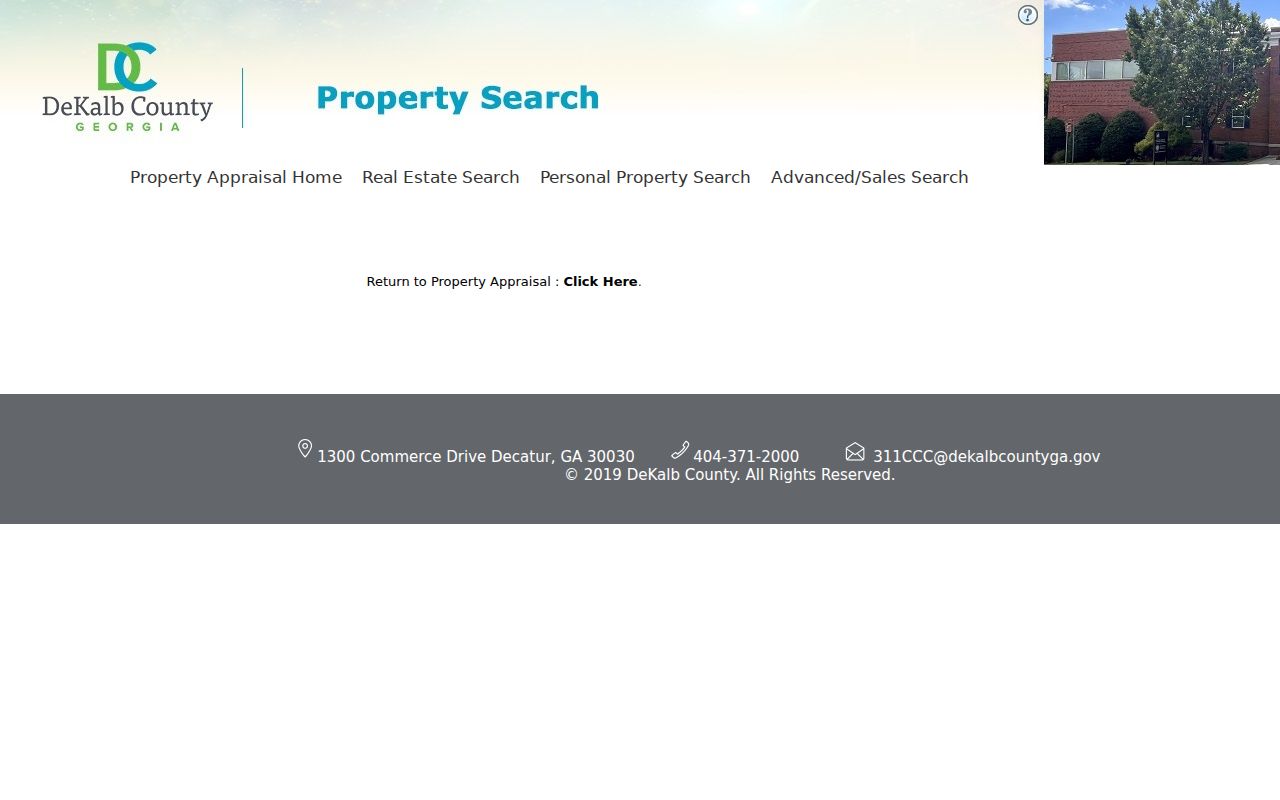
A returned owner is a tax-record fact, not proof that the owner occupies the home.
Dunwoody Deeds Link Names
The GSCCCA Real Estate Index searches DeKalb filings by party name. A grantor is usually the person conveying an interest, and a grantee receives it. Results may show document type, recording date, book and page, parties, legal description clues, and image access. Some functions require an account, and copies or images can carry a charge.
DeKalb land research has several dates that should stay distinct. The nominal index begins in 1822, but the 1842 courthouse fire destroyed deed books A through K. The first extant deed book is L from 1846. Paper indexes before 1947 and from 1947 through 2000 remain at the courthouse, while later indexing is computerized. The standardized statewide index reaches at least 1999. When online results end, use the clerk counter, mail-copy route, or DeKalb History Center house-history material.
The official deed-index screen appears below.
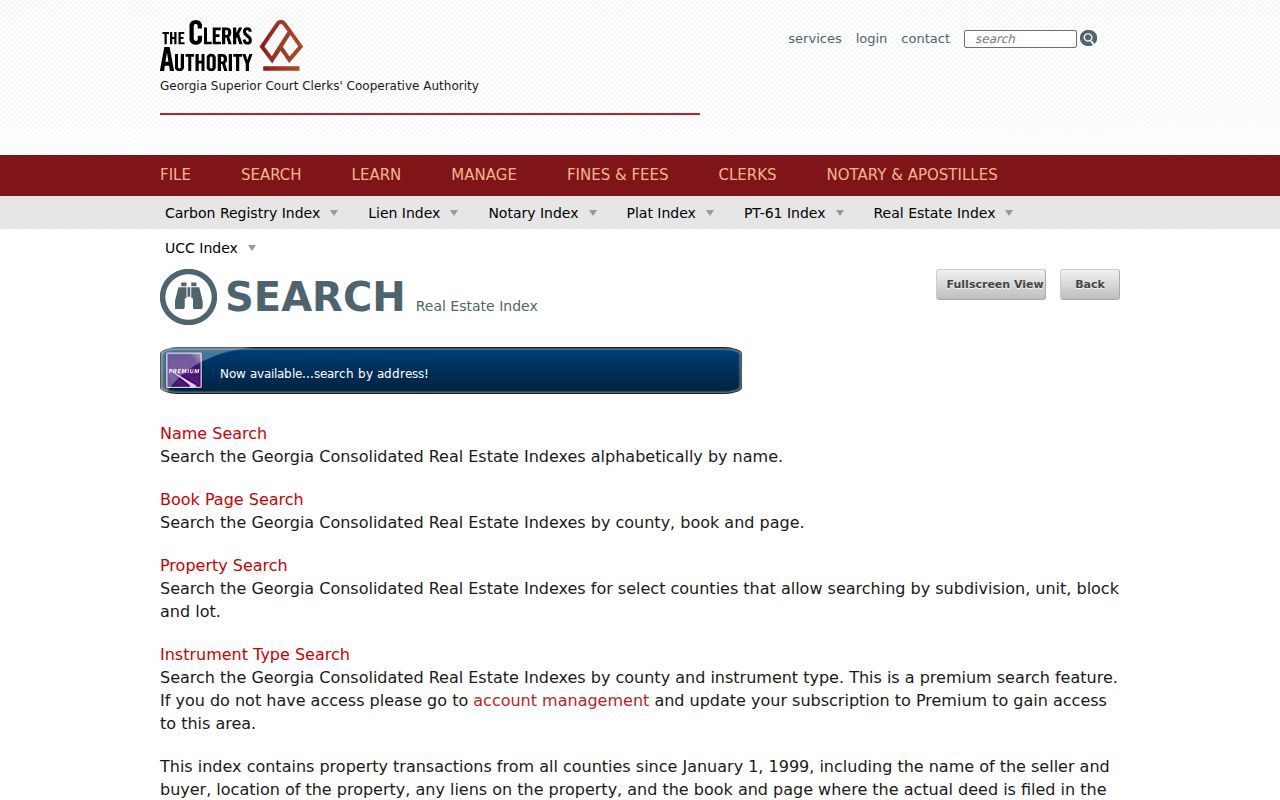
Book and page data creates a stable bridge from a changing street address to the recorded land instrument.
Current Dunwoody Resident Directories
No modern public roll lists each member of a Dunwoody household. Instead, several official sources list people in defined roles. Match the source to the question, and do not merge the roles into a claim of residence.
| Source | Who It Lists | Keeper | Access |
|---|---|---|---|
| Property appraisal roll | Tax owners | DeKalb Property Appraisal | Free portal |
| My Voter Page | The authenticated voter | Georgia Secretary of State | Private self-lookup |
| Real estate index | Parties to recorded filings | Superior Court clerk and GSCCCA | Index; some paid functions |
| Permit and code files | Applicants, owners, contractors | Dunwoody Community Development | Portal or request |
| Association directories | Consenting member households | Private associations | Authenticated members only |
Use the property roll for legal ownership, permits for recorded work, and a court index for a named party in a case. The Dunwoody resident lookup gives the one-person verification workflow. Private neighborhood directories remain private even when their organization names and public officers appear online.
Dunwoody Voter Lookup Boundaries
Georgia My Voter Page asks for a first initial, last name, county, and date of birth. An authenticated voter can review registration status, polling place, districts, a sample ballot, and participation history. The screen is not an open directory of a Dunwoody street.
Georgia law permits certain voter-list access through election officials, subject to purpose, format, and protected-field rules. A person seeking an authorized extract should contact DeKalb Voter Registration and Elections instead of trying to turn the self-service tool into a neighbor search. Safe at Home and VoteSafe protections may suppress an address in different contexts.
The official My Voter Page sign-in shows why a birth date and county are needed.
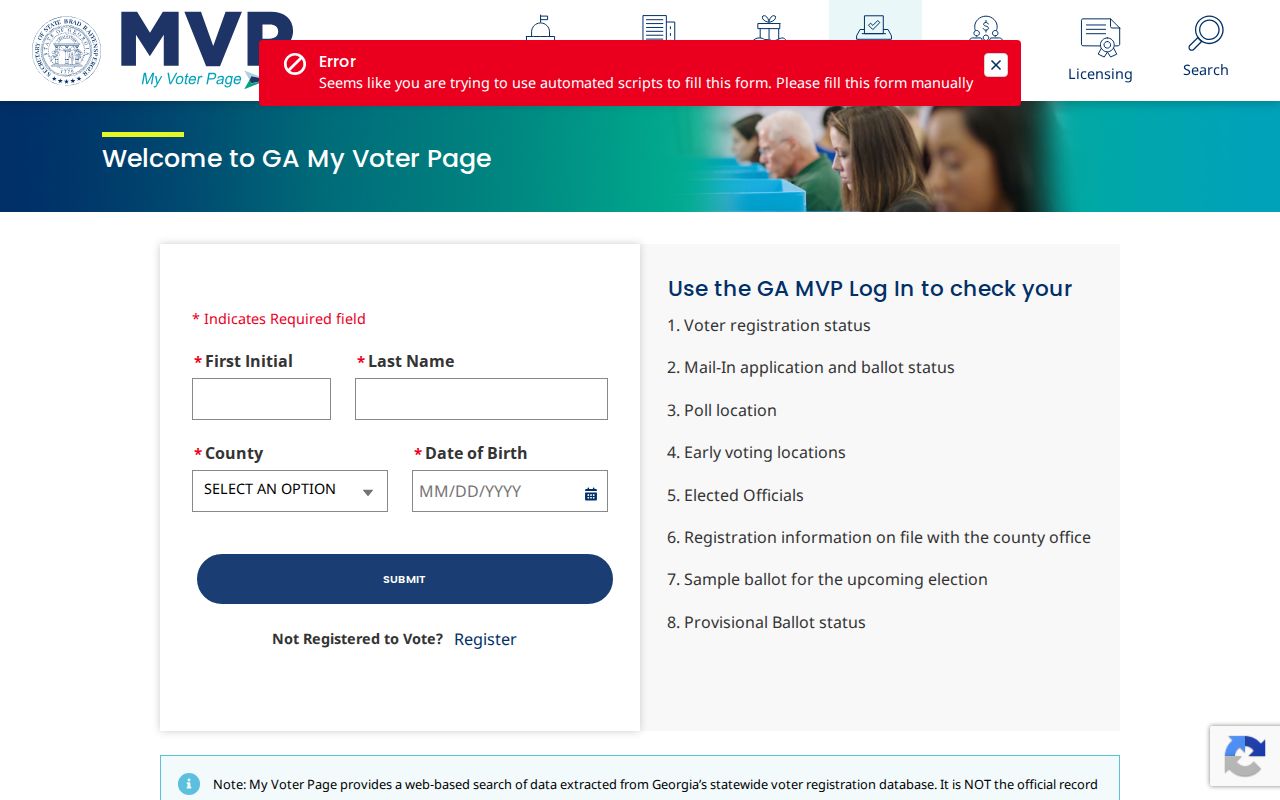
The authentication boundary helps distinguish a personal election record from a public residents directory.
Dunwoody Courts by Jurisdiction
Dunwoody Municipal Court handles city ordinance and traffic matters. DeKalb State and Superior Courts handle broader civil and criminal matters, while Probate Court handles estates and county marriage licenses. Federal matters for DeKalb fall within the Northern District of Georgia. Search the court with the right subject jurisdiction first.
The Georgia courts e-access directory routes users to providers, including the DeKalb Odyssey portal. Public results may contain a case number, party role, filing date, charge or case type, events, and disposition. A docket is the event list for a case, not the complete file. Sealed and restricted material is omitted, some providers require an account, and older judicial documents may require a clerk or Archives request.
Dunwoody Permit Records Changed
Dunwoody moved permitting, licensing, and code enforcement from iWorQ to CentralSquare on August 4, 2025. The current Permits and Inspections route can connect an address with an applicant, contractor, owner, work description, issue dates, workflow, and inspection status. Existing application or complaint holders may need city staff to help transfer an older matter.
City records begin in the municipal era. For permits, policing, zoning, or administrative work before incorporation, check whether DeKalb County retained the file. Dunwoody's newer SmartMap and 2025 zoning-entitlement scanning add useful parcel context, but a map layer does not replace the source permit or recorded deed.
Access tip. Search online first, then describe an address, date range, department, and record type in a city request when the portal has a gap.
Dunwoody Open Records Requests
The Dunwoody City Clerk is the local open-records officer. A useful request names the department, document type, address or person, and a tight date range. The portal accepts requester contact information, a detailed description, optional attachments, and a delivery preference. Electronic delivery is often the simplest route.
Under the Georgia Open Records Act, O.C.G.A. §§ 50-18-70 through 50-18-77, an agency must produce records or give a written timetable within three business days when production cannot occur then. Reasonable search and redaction costs may apply, and letter or legal pages are generally ten cents each under § 50-18-71. Send the request to the office that holds the file. The city cannot supply a county deed, and the Governor is not the general custodian for local records.
Dunwoody Vital Event Records
Georgia Department of Public Health and the DeKalb Board of Health issue eligible birth and death certificates from January 1919. Certified access is restricted by state law and DPH rules. The first search and certified copy costs $25, with additional copies at $5 when ordered together. DPH accepts online, mail, and counter requests with required identification and proof of eligibility.
Marriage verification is available from DPH for 1952 through 1996 at $10 for the first verification and $5 for added copies. DeKalb Probate Court holds county marriage licenses outside that interval. Superior Court holds divorce files. Historical microfilm and catalog material at the Georgia Archives is a research channel, not a substitute for a modern certified certificate.
Historical Dunwoody Resident Directories
Dunwoody history sits inside Atlanta and DeKalb directory runs because the city did not incorporate until 2008. The Decatur Library local-history collection holds print and microfilm city directories dating from 1928, census film, Georgia registers, newspapers, and other genealogy tools. Emory and the Digital Library of Georgia provide Atlanta directories from 1859/60 through 1922. DeKalb History Center holds selected Atlanta volumes from 1887 through 1953, a unique 1939 DeKalb directory, and city or suburban books beginning in 1956 through 1990 with gaps.
A printed entry can identify a householder, spouse, job, or street address, while a criss-cross directory reverses the order so a street can lead to a name. Atlanta-area renumberings in 1892 and 1926 mean a missing address may have changed numbers rather than occupants. The full shelves, abbreviations, and tracing method appear in the Dunwoody city directory.
The official library collection page identifies the local-history route.
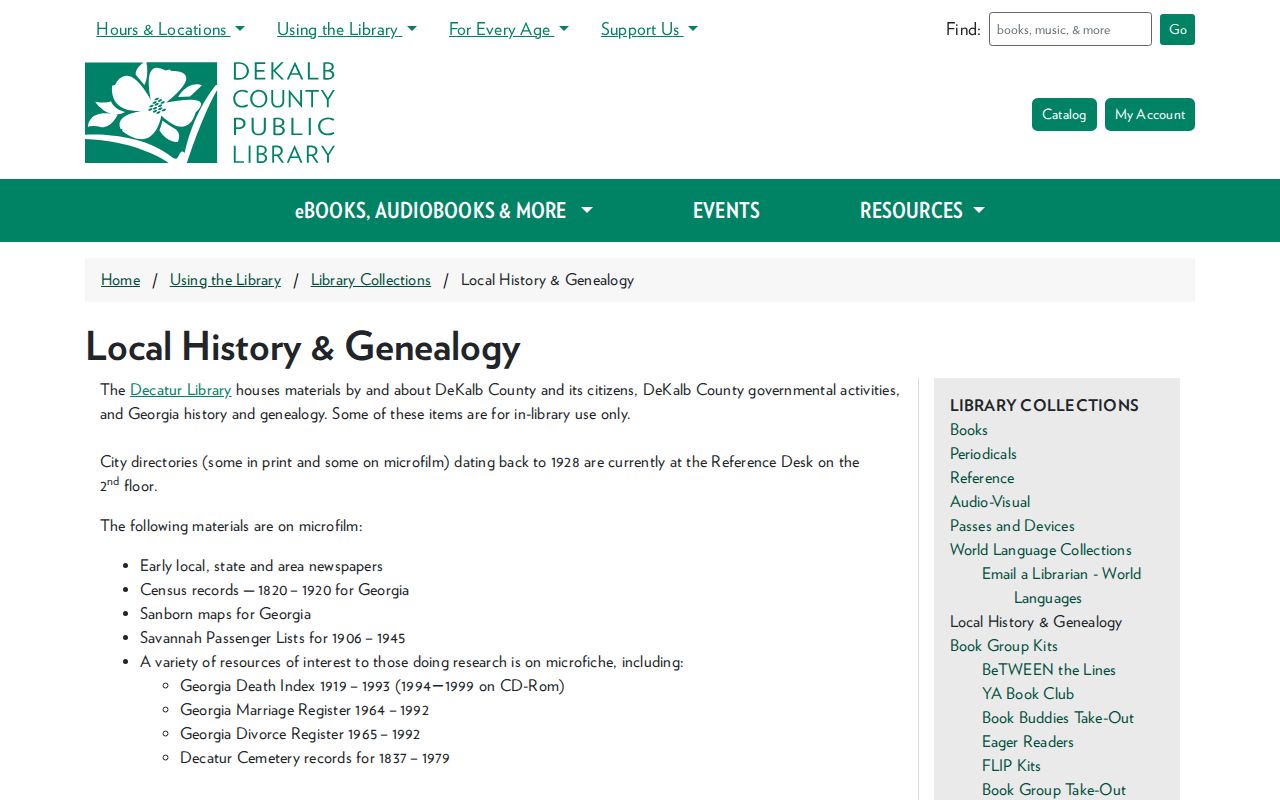
These holdings bridge names that disappear from newer property, court, and permit systems.
Dunwoody Records Survived Fire
Fire destroyed nearly every DeKalb County record on January 9, 1842. Superior Court Minute Book A, covering 1836 through 1843, survived because a clerk had taken it home. DeKalb History Center now holds the 478-page volume. The loss explains why an early family or land trail can end even when a nominal index suggests older coverage.
Use surviving deed books, the sole 1939 DeKalb directory, census schedules, newspapers, probate files, and historical society collections as separate bridges. A directory entry or oral-history name is a clue to test, not proof of occupancy at a modern parcel.
- Roll
- An official list created for a defined purpose, such as tax or elections.
- Index
- A finding aid that points to a record and may not include its image.
- Parcel
- A mapped unit of land with its own identifier.
- Criss-cross directory
- A book arranged by street or phone rather than only by surname.
Limits of Dunwoody Directories
Official rolls do not reveal every person in a home. Renters may be absent from the owner roll. Voter information has access controls. Driver and utility data are restricted, and police or vital files contain protected fields. Georgia Safe at Home provides a substitute address and mail forwarding for eligible participants, while VoteSafe is specific to voter records.
Commercial people-finder products may combine stale or mismatched data. Official indexes are narrower, but their defined keeper and correction route make them easier to verify. When a source is wrong, ask that custodian about its correction process rather than copying the error into another search.
Lawful use. Use Dunwoody resident records for genealogy, reconnecting, estate work, civic research, or personal safety. Never stalk, harass, or harm anyone.